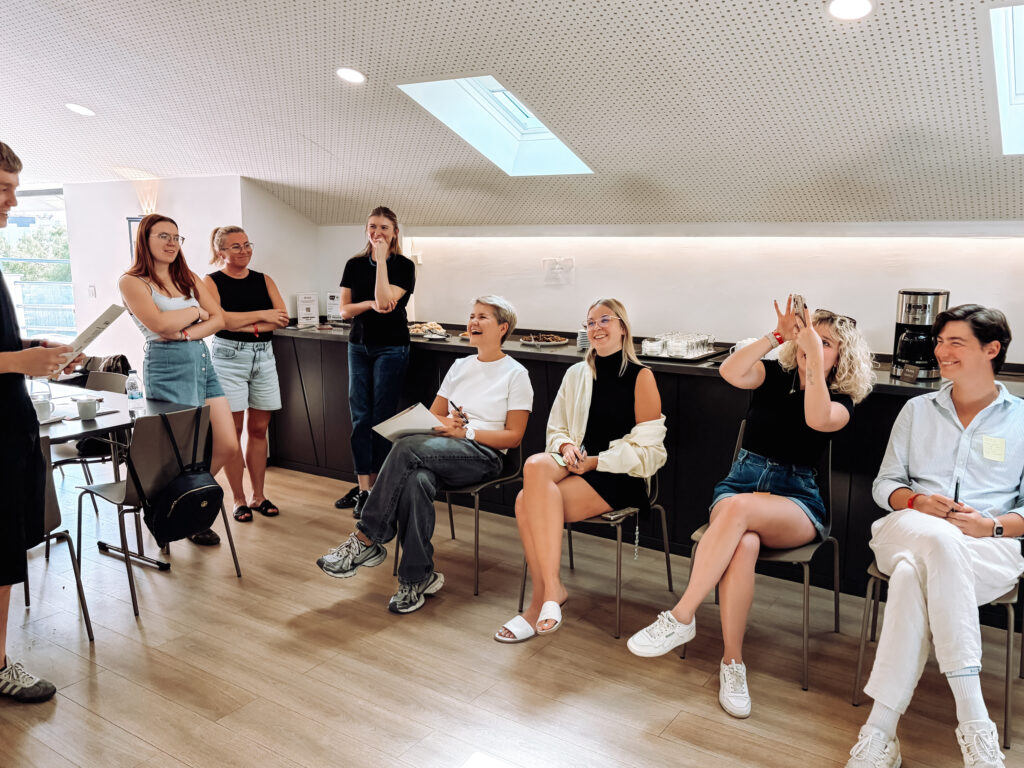
How can artificial intelligence support course development? How can sustainability education translate into everyday habits? And how can learning and decision-making processes become more accessible to people whose voices are often overlooked? These questions guided Baltic InnoLab’s seven-day training visit to Monad Institute in Antalya, Turkey, as part of an Erasmus+ adult education mobility project.
The team attended three complementary courses covering AI-driven policy modernisation, inclusive sustainability monitoring, and democratic resilience and design thinking.
The AI course explored generative AI tools for policy analysis and learning content development, alongside information verification and responsible use. The sustainability course focused on non-formal learning methods that help adults adopt sustainable habits and monitor behavioural change. The design thinking course examined ways to understand people’s needs, facilitate dialogue and develop solutions that reduce barriers to participation.
Practical activities included developing learning module prototypes, testing methods and considering how they could be adapted to Baltic InnoLab’s work. Joint reflection sessions connected insights across the three courses, particularly around accessibility, trust and supportive learning environments. Exchanges with colleagues from Poland also brought additional perspectives to discussions on democratic participation and inclusion.
The team plans to apply this experience by updating Baltic InnoLab’s learning materials and working methods. Planned steps include developing a practical AI toolkit, a sustainability learning module, and a more consistent approach to involving future participants in the design of learning activities. Particular attention will be given to the needs of rural women, older adults and people with limited digital skills.
The visit forms part of the project “Weaving an Inclusive Baltic InnoLab Future with Green and Digital Threads”, funded by the European Union under the Erasmus+ programme.
Views and opinions expressed are those of the authors only and do not necessarily reflect those of the European Union or the Education Exchanges Support Foundation. Neither the European Union nor the granting authority can be held responsible for them.